 Posted by
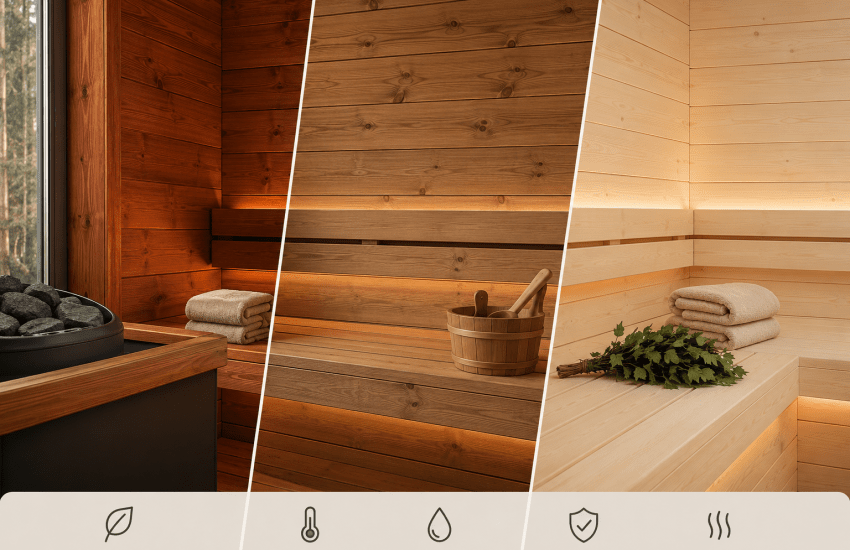
 When you’re choosing a barrel sauna, the wood you pick affects not just how it looks, but how it feels, how long it lasts, and how much maintenance it needs. The three most common options for quality outdoor saunas are cedar, thermowood, and Norway spruce. Each has strengths that make it better suited to different climates, budgets, and design preferences.
Understanding these differences helps you avoid surprises later—like excessive cracking, fading, or maintenance that feels more like work than relaxation.
Cedar: The Classic Sauna Wood
Cedar is the traditional choice for saunas in North America and many other regions. It’s known for:
- A warm, reddish or golden tone that ages to a soft silver-gray if left untreated.
- Natural resistance to moisture, insects, and decay, thanks to its oils.
- A pleasant, subtle aroma that enhances the sauna experience.
Cedar works well in:
- Humid climates where moisture resistance is critical.
- Coastal or rainy areas where wood is exposed to frequent dampness.
- Settings where a natural, rustic look is desired.
It’s generally medium-priced and widely available, making it a balanced option for many homeowners. If you’re looking at barrel sauna kits from Backcountry Recreation, cedar is often one of the baseline material choices, ideal for everyday use in varied weather.
Thermowood: Stability and Modern Simplicity
Thermowood is wood that has been heat-treated at high temperatures in a controlled process. This:
- Reduces the wood’s ability to absorb moisture.
- Makes it more stable, with less shrinking, swelling, or warping.
- Changes the color to a deeper, uniform brown tone.
Thermowood is great for:
- Areas with extreme temperature swings.
- Owners who want a more “finished” look without heavy staining.
- Those who prefer lower maintenance and more predictable performance over time.
Because the thermal process changes the wood’s structure, thermowood is less prone to mold and rot, but it can be slightly more brittle than natural cedar. It’s a good mid-to-high-end option for modern designs and clean aesthetics. Many outdoor sauna options from Backcountry Recreation include thermowood models designed for long-term durability with minimal upkeep.
Norway Spruce: Budget-Friendly and Traditional
Norway spruce is a lighter, more affordable wood often used in European sauna construction. It has:
- A pale, almost creamy color that can be stained or left natural.
- Good insulation properties, helping the sauna heat efficiently.
- A classic, simple look that fits well in traditional or minimalist settings.
Spruce is best for:
- Buyers on a tighter budget who still want a quality sauna.
- Regions with moderate climates where extreme moisture isn’t constant.
- Owners who plan to paint, stain, or seal the wood regularly.
Because spruce is less naturally resistant to moisture than cedar, it usually benefits from periodic maintenance, such as sealing or oiling, especially in wet climates.
How to Choose Based on Your Climate
- Very wet or coastal climates: Cedar or thermowood are usually better due to their natural moisture resistance.
- Cold, dry, or moderate climates: Norway spruce can work well, especially if you’re willing to maintain it.
- Hot, sunny climates: Thermowood’s stability can help reduce cracking and warping from heat and UV exposure.
- Mixed climates with big swings: Thermowood or high-quality cedar often provides the best balance of stability and durability.
Style and Maintenance Considerations
Beyond climate, think about:
- Look: Do you want warm reddish tones (cedar), deep brown (thermowood), or a lighter, more neutral base (spruce)?
- Maintenance: Cedar and thermowood can often be left to age naturally; spruce usually needs more regular sealing or staining.
- Budget: Norway spruce is typically the most affordable, cedar is mid-range, and thermowood often sits at the higher end.
If you’re unsure which material fits your space, compare real examples in wood-fired and electric hot tubs at Backcountry Recreation, which often explain material choices and how they perform in different conditions.
Match the Wood to Your Home and Lifestyle
The best sauna material isn’t just about the wood itself—it’s about how it fits your home, your climate, and how much time you want to spend maintaining it. Cedar brings tradition and natural resilience, thermowood offers stability and modern simplicity, and Norway spruce gives you a classic look at a more accessible price.
Take a look at outdoor sauna options from Backcountry Recreation to see how each material is used in real builds, and use that as a guide for what will feel right in your backyard.
For broader insights on wood care and outdoor structures, check resources like This Old House on wood maintenance, and Fine Homebuilding for material comparisons and climate considerations.