 Posted by
 Two of the strongest wellness cultures in the world are Japan and Scandinavia. Japan gave us the concept of Wabi-sabi, finding beauty in simplicity and imperfection. Scandinavia gave us the sauna itself, along with a deeply practical approach to comfort and nature. When you blend these two design philosophies together you get something called Japandi, and inside a sauna space it feels remarkably natural.
The good news is that Japanese and Nordic design already share a lot of common ground. Both value natural materials. Both prefer clean lines over clutter. Both treat the human connection to nature as something worth designing around. Building a Japandi sauna is less about forcing two styles together and more about finding where they already overlap.
Start with the wood
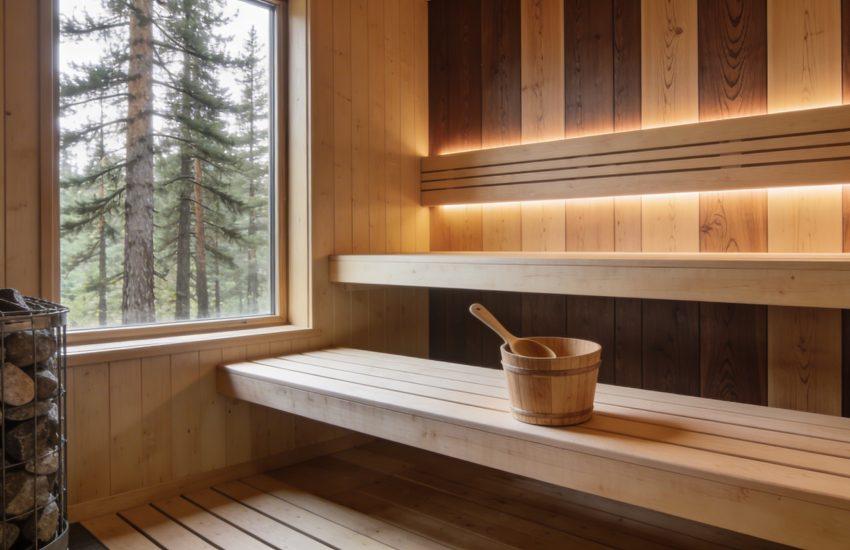
Both design traditions love wood, but they use it differently. Nordic sauna design tends to favor light woods like pine, spruce, and aspen. Japanese interior design often brings in darker, more refined timbers like hinoki cypress or cedar. A Japandi sauna can use both. Light wood on the benches and ceiling for that airy Nordic feel, with a darker wood accent wall or floor trim to bring in the Japanese warmth and depth.
Hinoki cypress is worth a special mention here. It is a traditional Japanese bath wood with a naturally beautiful grain and a subtle, calming scent. It is also highly resistant to moisture, making it genuinely practical for sauna use and not just a decorative choice.
Keep the lines clean
Both traditions hate clutter. Your sauna should have nothing in it that does not need to be there. Benches should be simple and well-proportioned. Lighting should be warm and low, hidden where possible rather than exposed. If you are adding a window, make it large enough to frame a view of nature outside. A single cedar bucket and ladle is all the accessorizing you need.
Avoid anything with heavy ornamentation, decorative hardware, or busy patterns. Natural texture is your decoration. Let the grain of the wood do the work.
Bring nature in
A Japandi sauna should feel connected to the outside world even when you are deep in heat. A small window at seated eye level that looks out onto a garden, a stone wall, or a patch of trees makes a huge difference. If an outdoor view is not possible, a simple arrangement of river stones near the heater or a single potted plant just outside the sauna door keeps that natural connection alive.
The overall feeling you are going for is calm, intentional, and grounded. Nothing flashy. Nothing loud. Just a beautifully functional space that makes you want to slow down the moment you step inside.