 Posted by
 Choosing between insulated and uninsulated barrel saunas can significantly impact your heating costs, session quality, and year-round usability. While both types offer the authentic barrel sauna experience with their distinctive curved design, the construction differences affect everything from energy efficiency to performance in cold weather. Understanding these key differences will help you make an informed decision that matches your climate, budget, and how often you plan to use your sauna. In this guide, we’ll break down the construction, performance, and cost considerations to help you choose the right barrel sauna for your needs.
What Is an Uninsulated Barrel Sauna?
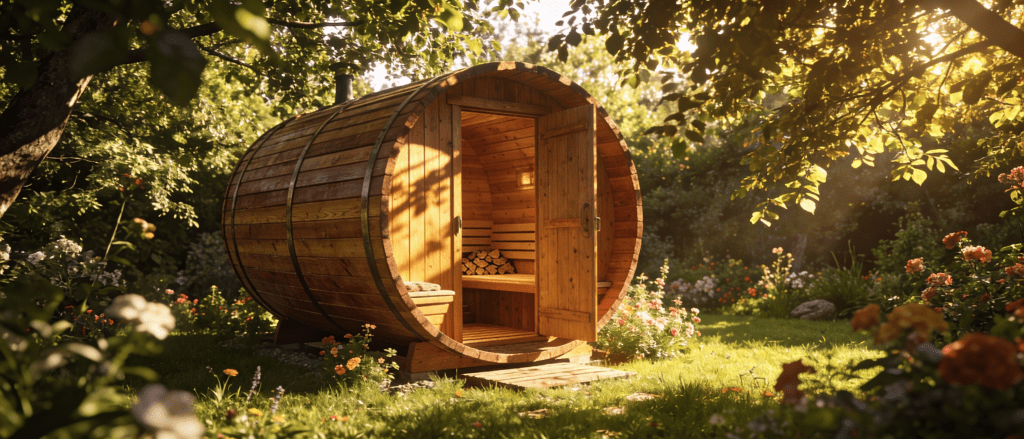
An uninsulated barrel sauna is built with a single layer of wood, typically 1.5 to 2 inches thick, with no additional insulation material between the inner and outer walls. Most commonly constructed from cedar, spruce, or thermowood, these saunas showcase the natural beauty of wood both inside and out. The barrel design itself provides some structural integrity and heat distribution benefits, but the lack of insulation means heat transfers directly through the wood walls.
These traditional saunas work by relying on the heater’s power and the wood’s natural thermal properties to maintain temperature. Heat radiates through the wood, creating the classic sauna experience, but also escapes more readily into the surrounding environment. This makes uninsulated barrel saunas best suited for milder climates where temperatures rarely drop below freezing, or for seasonal use during warmer months when heat retention is less critical.
What Is an Insulated Barrel Sauna?
An insulated barrel sauna features additional insulation material sandwiched between interior and exterior wood layers. This typically includes fiberglass batting, mineral wool, or reflective foil insulation, often combined with a vapor barrier to prevent moisture damage. The construction usually involves a double-wall design where the exterior and interior wood panels are separated by 2-4 inches to accommodate the insulation layer.
The insulation works by creating a thermal barrier that traps heat inside the sauna chamber while preventing cold external temperatures from penetrating. This means the sauna heater doesn’t have to work as hard to maintain your desired temperature, and the heat stays consistent throughout your session. Insulated models are specifically engineered for year-round use and can perform efficiently even in extreme winter conditions where temperatures plunge well below zero.
Key Differences: Performance & Efficiency
The performance gap between insulated and uninsulated barrel saunas becomes most apparent in three key areas. First, heat-up time differs significantly—an uninsulated sauna may take 45-60 minutes to reach optimal temperature in cold weather, while an insulated model often reaches the same temperature in 30-40 minutes. More importantly, uninsulated saunas lose heat quickly once the heater cycles off, while insulated versions maintain temperature much longer.
Energy consumption represents another major difference. Uninsulated saunas require constant heater operation to combat heat loss, especially when outdoor temperatures drop. An uninsulated barrel sauna used regularly in winter can consume 30-50% more electricity than an insulated equivalent. This translates to significantly higher operating costs over time, particularly if you use your sauna several times per week.
Temperature consistency also varies considerably. Uninsulated saunas experience more temperature fluctuation, with cooler spots near the walls and ceiling where heat escapes. Insulated models maintain more uniform heat distribution throughout the chamber. In terms of climate performance, uninsulated saunas struggle when outdoor temperatures drop below 20°F, often unable to reach or maintain proper sauna temperatures, while insulated saunas perform reliably even in sub-zero conditions.
Cost Comparison
The initial investment for an uninsulated barrel sauna typically ranges from $3,000 to $6,000 for a quality 4-6 person model, making it the more budget-friendly option upfront. Insulated barrel saunas of comparable size generally cost $5,000 to $10,000 or more, with the price increase reflecting the additional materials, labor, and construction complexity involved in the insulated design.
However, long-term operating costs paint a different picture. If you use your sauna three times weekly in a cold climate, an uninsulated model might cost $50-80 per month in electricity, while an insulated version could run $30-45 monthly. Over five years, the energy savings from an insulated sauna can amount to $1,800-2,500, significantly offsetting the higher purchase price. The break-even point typically occurs within 2-4 years for frequent users in cold climates, making insulated saunas the more economical choice long-term.
Which One Should You Choose?
Choose an uninsulated barrel sauna if you live in a mild climate where winter temperatures rarely drop below freezing, plan to use your sauna primarily during spring, summer, and fall, or have a limited upfront budget. Uninsulated models also make sense if you want a simpler installation or prefer the traditional aesthetic without modern additions.
Opt for an insulated barrel sauna if you experience cold winters and want year-round access, plan to use your sauna frequently (3+ times per week), prioritize energy efficiency and lower operating costs, or are willing to invest more initially for long-term savings. Insulated models are essential if you live in areas with harsh winters or if consistent, reliable performance matters most to you.
Conclusion
Both insulated and uninsulated barrel saunas deliver authentic sauna experiences, but your choice should align with your specific circumstances. Consider your local climate conditions, how frequently you’ll use the sauna, and whether upfront savings or long-term efficiency matters more to your situation. For those in warmer regions or casual users, uninsulated models offer excellent value. For cold-climate residents or dedicated sauna enthusiasts, the insulated option pays dividends through lower energy bills and superior year-round performance.